Our Origin
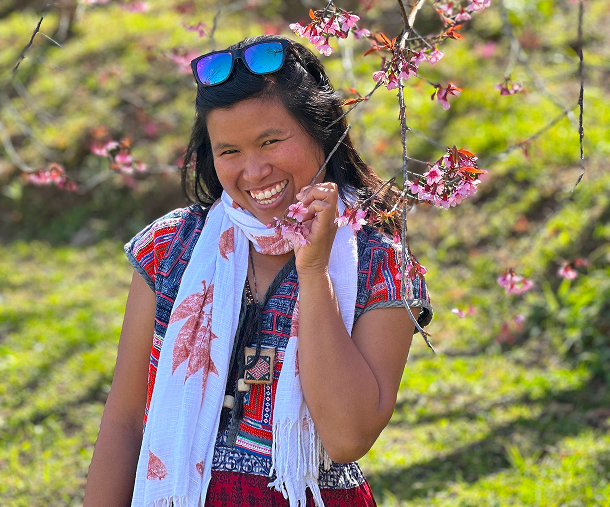
Panya Forest is a flowering vine that has grown as a result of all the hard, loving work of the many hands who cultivated its original incarnation; The Panya Project, which in its hey day was one of the most thriving centers for permaculture in all of Asia. Birthed from the question: What if peoples from diverse backgrounds could come together, share a piece of land, and build something that honors both eARTh and each others authenticity, it has now blossomed into a place of not only practical skill-building, but a space for the development and exploration of the contemplative arts, of ritual farming, and living Myth.
Rooted in the Himalayan foothills of the ancient Lanna Kingdom, now referred to as Chiang Mai, Thailand, we have spent years cultivating not just gardens, but relationships. With people. With animals, plants and minerals. We bridge old ways with the present moment and dedicate ourselves to a time beyond now.
“We explore how to live harmoniously across diverse cultures, experiment with alternatives to capitalism, raise children as a village, heal from loss, regenerate the land, and live simply in ways that nurture both people and planet for generations to come.”
A New Chapter (2026)
In 2026, Panya entered a new phase. After years of building, losing, learning, and beginning again, we are reimagining what community can be. This chapter is about deepening roots, welcoming new people, listening to new stories, cross-pollinating with myriad dreams and asking deeper questions about how humans can return to living in right relation with the natural world.
The land is still here. The seeds are still alive. The invitation remains open. We are listening.
“The next buddha will be the sangha.”
– Thích Nhất Hạnh
Panya Forest: A Place for Remembering
Deep in the forests of Northern Thailand an ancient future is re-emerging. Panya Forest offers refugees from modernity an opportunity to engage again with natural co-existence by adhering to the original, foundational principals of respect and reciprocity, agreements once skillfully orchestrated between humans and The Wild, ways that all in-tact peoples of the world were once well educated in before the advent of so-called “civilization”. Here skills of natural building, ritual farming, seed saving, cooking, beauty making, etc. are all lived into experientially through communally embodied practices that return villagers to a relational existence rooted in myth, meaning and shared responsibility.
Working closely with neighboring indigenous communities, the Panya Forest community seeks to be a bridge between the world of land-based peoples of culture and economic/technologically rooted friends from the cities. Being uniquely situated on 12 acres of forest resting on the edge of the Himalayan foothills, we strive to reimagine what post-modern life can be, how it can be ethically designed in ways that meet our basic needs, with dignity and care for the land serving as the main vehicles for important decision making. Embracing grief, uncertainty, and always allowing for mistakes, we explore how humans can embrace The Wild in ways that don’t require us to destroy delicate ecosystems nor abandon all modern convenience while operating in alignment with the original laws of right reciprocity, respect and dedication to a time beyond now.
Children (and adults) are homeschooled here. Education at Panya Forest is not offered linearly, preferring instead to start precisely where everyone is, where the sun is, the moon, the seeds in the ground. etc. Everything happens at the appropriate time, designated by the needs of Spirit and Soil. Logical interpretations of the way things are merge with animistic undertones in an effort to return community members to a place of collective, inter-species, intergenerational remembrance and shared unfolding. A reorientation of time surfaces thus, as no clocks, no WIFI, no televisions, etc. block the views of eARTh and sky. Teachings arrive via riddles, spontaneous prayers, tears being shed, impromptu dances, meandering metaphors and initiatory Stories told round the fire under blankets of origin-stars.
It is a safe space for refugees of war. It is a place of peace where farmers, grandmothers, poets, peasants, artists, musicians and chefs are exalted and honored as the esteemed keepers of wisdom and visionary hope they are. It is a place where community conflict is not avoided but actively addressed in proactive, life-serving ways. The realities of modern life are not ignored here, the needs for financial abundance, and other post-modern necessities are all explored in tandem with neglected ancestral skills. All decisions made with consideration for the well-being of future generations, both human and more-than-human.
The goal is to aid in the re-emergence of life-serving, ancestral memory by enabling the coming together of enough appropriate conditions for the rebirth of wisdom. As any seed saver knows, such unlikely events do in fact occur. When the right soil meets the right water, the right amount of sunlight, etc. and is met at dawn each day with the right old-time songs and pulsing rhythms, seemingly extinct seeds miraculously reappear.
At Panya Forest, we believe people are like plants. Even though modern education has resulted in mass amnesia and a tragic atrophy of human creativity that has resulted in the genocide of countless languages and myriad ways of seeing, That Which allowed these all but forgotten visionary educations of the past to surface long ago in order to birth said lost life-ways, still exists, patiently waiting for the right time to breathe life again into the dormant seeds of cultural excellence, in new ways, in ancient, never before seen ways.
What We Do
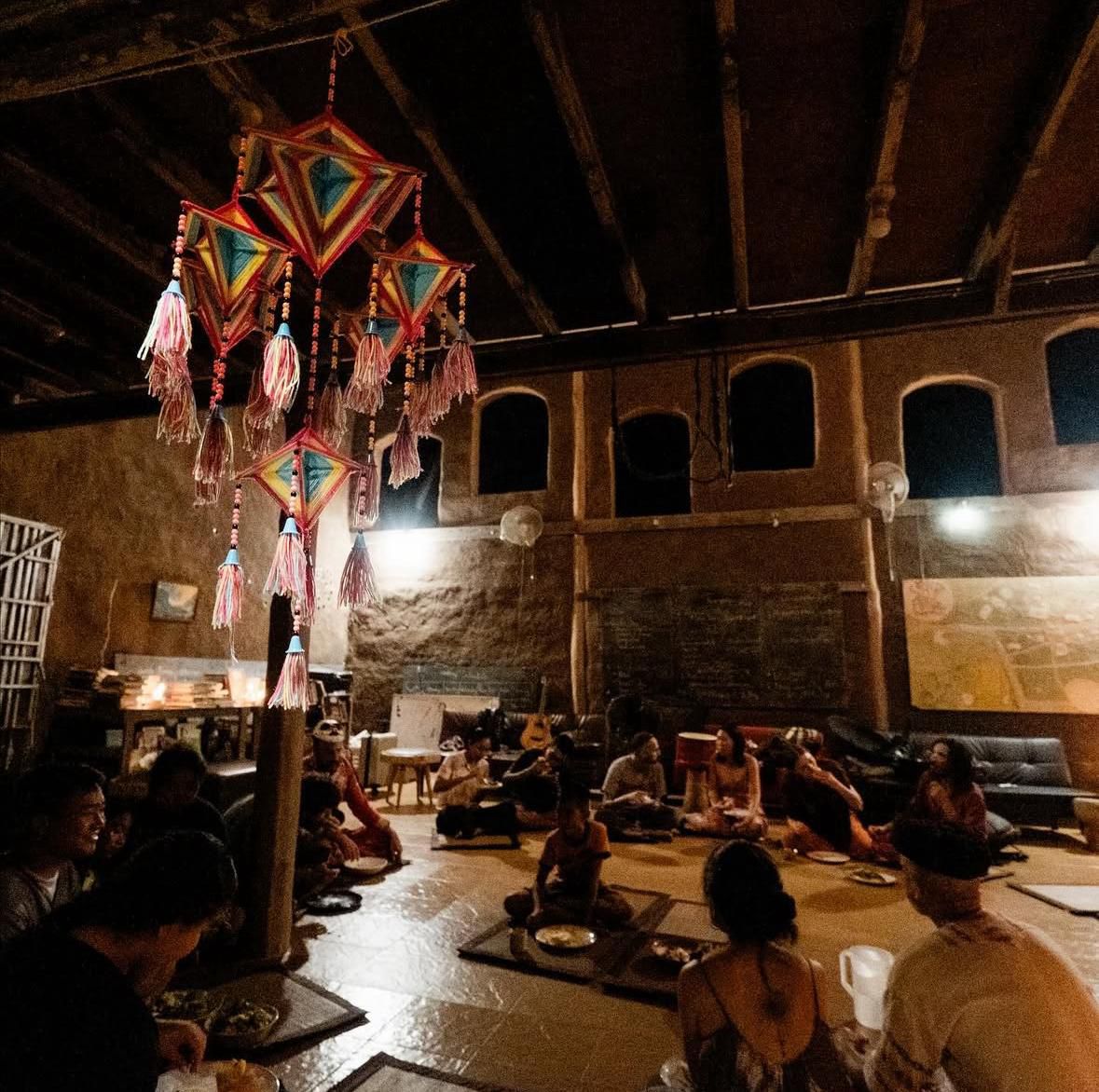
Day to day, Panya Forest is a living school/unschool. We tend gardens, preserve seeds, build structures from natural materials, share meals, make art and hold space for ceremonies, learning, rest and play. We have no official mission statement, no rigid set of rules, just a shared desire to live and eat well. We make lots of mistakes and no one here is an expert on anything. No two days are the same, no two people think the same. Like the seeds we tend to, we are diverse, unpredictable and always changing.