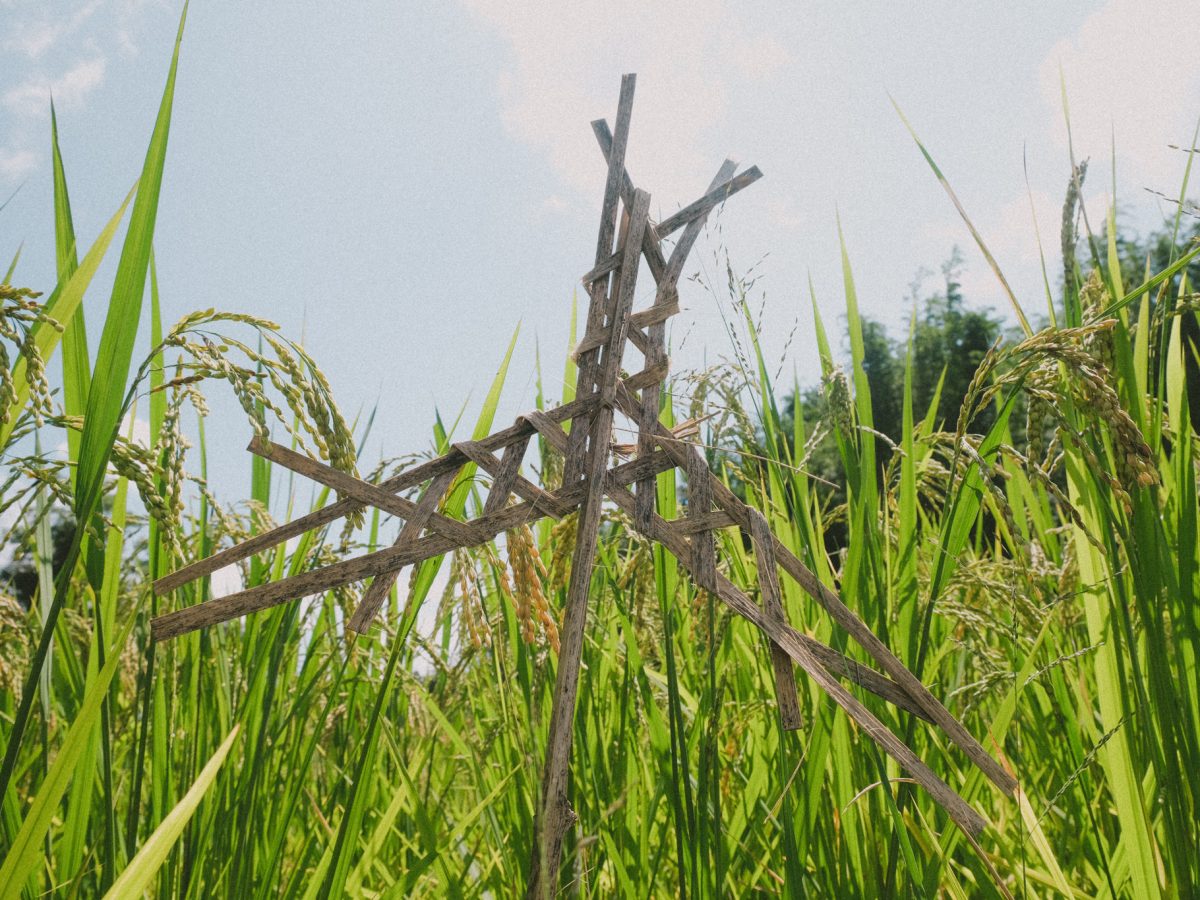
Stories That Rice Tells is a storytelling project rooted in the belief that rice is more than food. It is multi-sensory memory. It is ceremony. It is a living record of how communities have cared for one another and for Land since time immemorial.
This unique collaboration between Panya Forest and the Pgakenyaw community of Baan Nong Tao will be a five-session immersive experience that invites participants to listen deeply, beyond the conceptual limitations of rational understanding. Together, we will journey through the rice fields and ancestral kitchens of still living vestiges of intact village life, to learn from farmers, elders, seed-keepers, story tellers and shaman about how rice speaks to life into living dreams.
————-
“The myths of the world are not abstract ideas. They are meant to stir a somatic experience of connection to the natural world and the larger cosmos.”
-Josh Schrei (The Emerald Podcast)
————————-
Modern society has become overly fascinated with “western” thinking that emphasizes science and technology over raw experience and ritualized living. With over 94% of the world’s seeds having gone extinct in the last 30 years and climate change affecting all due to a rapid global adoption of these narrow views, coupled with an inability for most to remember how to live well in a place, it is clear that a return to a deeper, more mythical, understanding of our place in the larger Story is essential.
It isn’t enough to merely have an intellectual understanding of the earth. We are of Earth and can only heal with Her. Our understandings of life must be embodied. We must feel our union with all life. Factual study alone cannot do this however, which is why ancient peoples of the world understood their relation with time and place via Story.
The arts were not made only for entertainment but for deep healing, communication and the transmission of wisdom. Myth can initiate our knowing beyond mere facts into a place of being.
…
Episode One: นี่ซ่อโค่ ลาคุปู (When the Rice Goddess is Pregnant, Conceived: New life new seeds)
August 15-18, 2026
In P’gakeryaw culture, the month of August marks an important time of year, when two sacred ceremonies are held:
1. A rice ceremony, where people pray for seeds, crops, and water
2. A mid-year celebration, where the community gathers again to sing poems and call back the spirits
…
Episode Two: ลานอ กุ๊ลอบือ ( When the rice is threshed)
October 27-30, 2026
Pgakenyaw tribe ritually enacts the “Got To Git Ko”: a ceremony which signifies sending the Tho Bee Kha bird back to the sky and keeping seven seeds for the future harvests.
…
Episode Three: เจ๊าะเกอะโดะ Jau K’ Do (The Lazy Man Story and The Crying Place)
January 7-10, 2027
We come from lands that know the world differently – we come from cultures that had once lived harmoniously and in intimacy with a cosmos that is just as alive as we are. Unfortunately, these cultures are being sterilized, demonized, and homogenized under the auspices of an increasingly synthesized world. Slowly, the thrilling plurality of our many worlds is fading away under a monoculture of being that cannot serve our deepest aspirations and highest potentials.
**Bayo Akomolafe**
In this session participants will learn about Five Basic Problems all humans have, as understood by Pgakenyaw elders, in order to cultivate a deeper understanding of how to be a simple human living in right relation with earth.
…
Episode Four: กี่จี๊อ นี่ซอโค่ (Pgakenyaw New Year and The 7 Layers Philosophy Teachings)
February 20-23, 2027
The rice harvest is completed before Pyathoe, and according to Pgakenyaw traditional practice there must be a celebration for the consumption of the new crop. It is also the time to divine the date for commencement of the next crop. Typically, this time of year is also when new houses are built, and it is custom to celebrate the completion of a new dwelling.
Pgakenyaw community celebrates stages of the rotational farming calendar starting with Kayi New Year around February. Every family sings songs about the relationship between people and the spirit of Earth and asks the 37 spirits that signify different aspects of nature for health, good food and a good life.
…
Episode Five: ลานุย สู่ลอบือ
June 19-22, 2027
Pgakenyaw people have always farmed on both flat plains and mountains, which is an important part of the rotational farming balance. For example, Pgakenyaw refer to rice planted on mountains or ‘uplands’ as the ‘older brother and sister’, and rice planted in wetlands or ‘lowlands’ as the ‘younger brother or sister’. Within the rotational farming system, upland rice is grown in partnership with the seasonal rains and has more varieties. Lowland rice relies on manual irrigation and is more difficult to grow in the uplands