Project story
Thailand is facing unprecedented cultural and environmental challenges. Where once this lush kingdom was known globally for its rich ecological/cultural diversity, most of its forests have now been felled and industrial farming, western education and the like have nearly wiped out all ancient ways of living with land in one generation. As is true globally, the main motivating factor today is not right livelihood, but the allure of money.
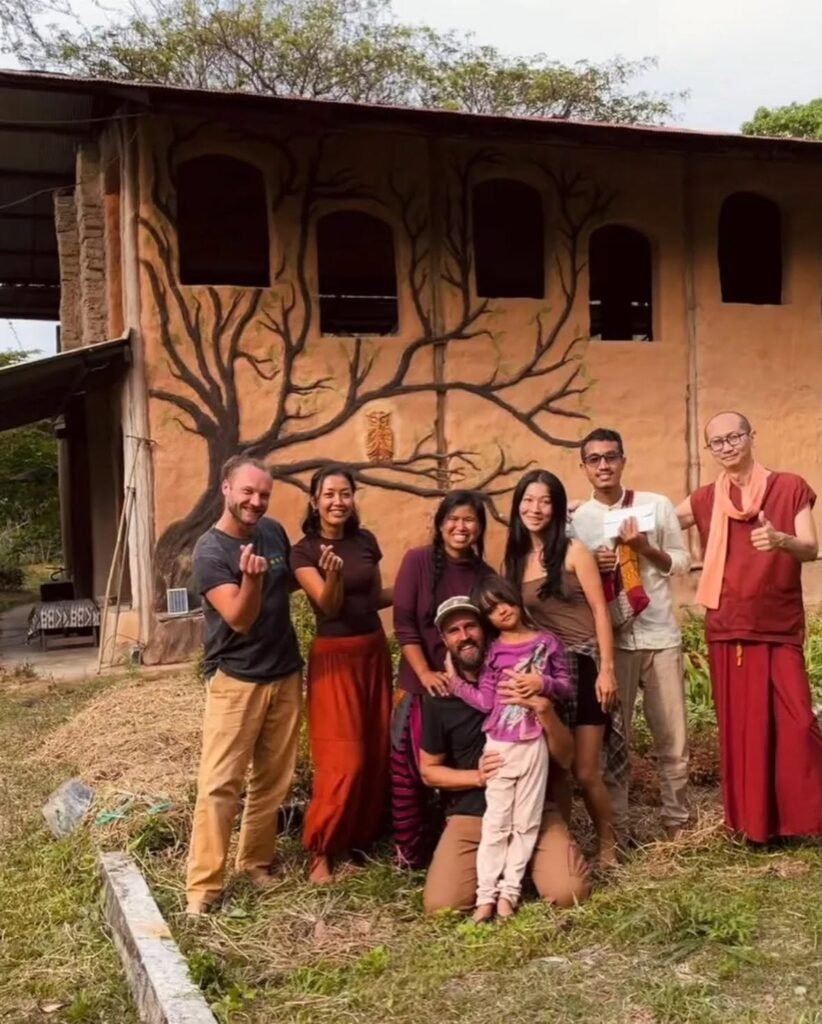
Gregory Pettys and Ramphai Noikaew have lived at the Pun Pun ecovillage, a globally recognized center for self-sufficiency in Northern Thailand for nearly 20 years. At Pun Pun, they learned how to live well in a place (how to treat water, build homes from mud, forage, save seeds, weave clothes from wild crafted fibers, make natural medicines, etc.). They learned so well in fact, that money isn’t needed for most of their daily needs! However, although this may seem impressive to some, due to the modern way of seeing reality, as informed by western education and various pressures from a system no longer rooted in land and culture but instead in the modern economy, villagers around them have not been inspired by their lifestyle choices, because, well, they make very little money from what they do! Convinced instead that industrial farming will make them rich, nearly all villagers near them now farm in the monoculture system, using dangerous chemicals and making it nearly impossible for a rich ecosystem to flourish. Where once this region was a diverse ecosystem filled with wildlife, now only a few varieties of fruit trees and corn are grown. Rare is it to spot any animals at all. The new generation wants money.
With this in mind, Gregory and Ramphai are working tirelessly to create a new project, one that uses the same land-based understandings as Pun Pun, but does so in ways that also demonstrate that one can earn a decent income from living off land in regenerative ways that keep land healthy, water pure, animals safe and cultural memory intact.
The vehicle with which they go about doing this is through the art of restorative agriculture, permaculture and agroforestry (ancestral skills recently lost to modern thinking). They aspire to restore land that was depleted from poor management, to sustainably grow cacao as a viable cash crop. They seek to do so by utilizing small-scale, cooperative efforts that are inclusive of villagers and demonstrate indigenous methods of reciprocity and traditional models of kinship.
Panya Forest is well situated for this effort as they have been learning closely from hill tribes as to how to do this in modern ways.The P’gakenyaw community of Hin Lad Nai has been mentoring them about rotational farming and sustainable honey harvesting, eco-friendly, reciprocal economic structures for over a decade.
Panya Forest has learned how to do things simply, with materials grown on site. They have been able to do a great deal already as most of their needs do not require money. The trees have already been planted (from seed). The main infrastructures have already been built (from mud). Food is growing everywhere (again, seeds!). Relations with villagers have already been forged.
Indeed, as anyone who visits can rightly attest, it is clear what the vision is, as the seeds have already been sown and many of these seeds are already flowering beautifully! However, as we all know, in this world, many things do require money. We are not extremists. We remain open to learning from others.
Currently, our main monetary need is regarding water. For Panya Forest to function well into the future, we need to forge a proper water system.
We seek assistance in funding our foundational water systems. We need to dig a well. We need to make a pond. We need to erect proper water treatment facilities. All of this, if it is to be done well, requires a great deal of money, which we do not yet have.
We are confident that what Panya Forest is building will be of great service not only to our bioregion here in Thailand, but to the world at large. We already regularly host visitors from around the globe, offering courses on appropriate technology, deep ecology, natural building, permaculture and the like. But most who come are already aware of humanities need to live a more “green” lifestyle. Our goal is to appeal to those who are fully invested in wishing to earn money, so much so that their memory of land has dissipated.
We believe we can demonstrate that restorative agriculture, coupled with ethical, small scale, co-operative entrepreneurship can offer a livable income.
Our community is primarily made up of families from rural parts of Thailand and refugees from Myanmar. Everyone here is rich in skills and spirit. However, no one here has money. We rely completely on the generosity of those who have been blessed with financial privilege. Eventually, we are confident that we will build an infrastructure that will ensure financial independence that is the result of right livelihood (i.e. living with land in a sustainable way that ensure the ecosystem we depend on can continue to thrive.).
Thank you in advance for your generous support.